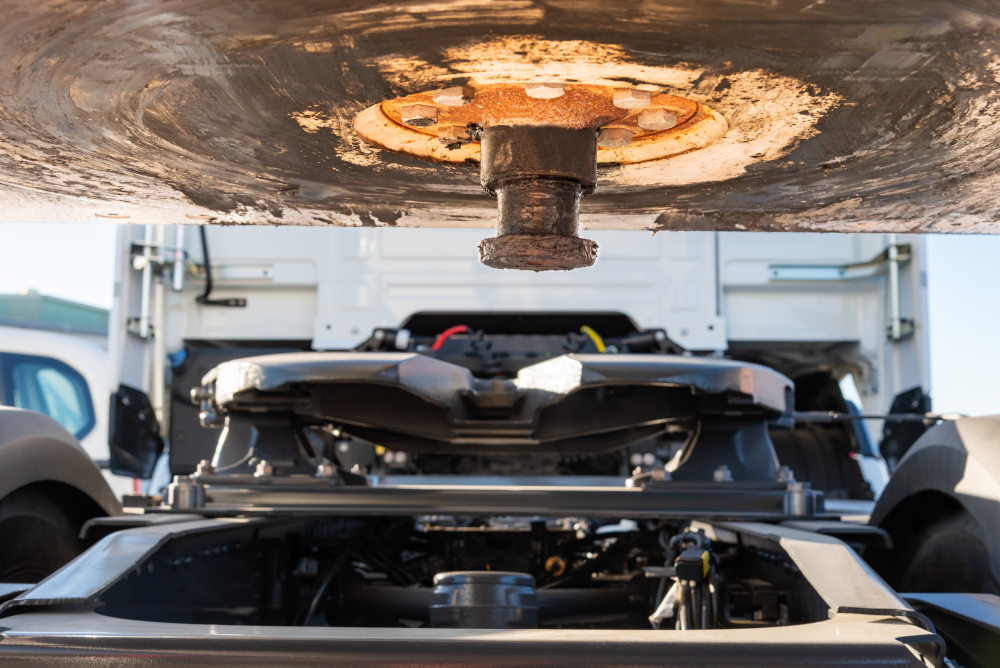
VTL 385-3(e) – Semitrailer Kingpin to Centerline (43 Feet)
The Benjamin Goldman Law Office can take on cases that involve commercial drivers and trucking companies cited under VTL § 385(3)(e), "Semitrailer Kingpin to Centerline." This section of the law allows longer semitrailers (up to 53 feet) on qualifying highways, but only if the distance between the kingpin and the centerline of the rear axle does not exceed 43 feet and the vehicle has required safety equipment. Violations can lead to significant fines and possible loss of commercial driving privileges. statewide.Attorneys with our firm help with such tickets in all areas of New York State, from Southampton to Buffalo.
Penalties for VTL 385-3(e) Semitrailer Kingpin to Centerline
Violations of VTL § 385(3)(e) are can be handled as traffic infractions. The fines are substantial compared to standard traffic tickets.
- First offense: Fine between $200 and $500; up to 30 days jail; surcharge $88 (city courts) / $93 (town & village).
- Second offense (within 18 months): Fine between $500 and $1,000; up to 60 days jail; surcharge $88 (other city courts) / $93 (town & village).
While violations do not carry driver violation points, they can impact a Commercial Driver's License (CDL) holder's employment record and CSA scores for carriers. Courts also have discretion to impose the higher end of the fine range, especially for egregious violations. For other dimension violations, such as VTL 385 Overwidth violations or VTL 385 Overweight violations, penalties can also be severe.
Statute
The relevant section of the Vehicle and Traffic Law states:
§ 385. Dimensions and weights of vehicles.
3. (e) Except in any city not wholly included within one county, any semitrailer with a length in excess of forty-eight feet, but not exceeding fifty-three feet, may be operated on any qualifying highway or specifically designated access highway if the distance between the kingpin of the semitrailer and the centerline of the rear axle does not exceed forty-three feet and if the semitrailer is equipped with a rear-end protective device of substantial construction consisting of a continuous lateral beam extending to within four inches of the lateral extremities of the semitrailer and located not more than twenty-two inches from the surface as measured with the vehicle empty and on a level surface. In addition, such vehicles may be operated on that portion of interstate ninety-five which connects interstate two hundred eighty-seven with interstate two hundred ninety-five, that portion of interstate two hundred ninety-five which connects interstate ninety-five with interstate four hundred ninety-five and that portion of interstate four hundred ninety-five between interstate ninety-five and the Nassau-Queens county line.
What This Means for Drivers: This section creates a special exception allowing longer semitrailers (between 48 and 53 feet) on qualifying highways and designated access highways, but only if:
- The distance from the kingpin (the connection point on the semitrailer that attaches to the fifth wheel of the tractor) to the centerline of the rear axle does not exceed 43 feet.
-
The semitrailer is equipped with a rear-end protective device
(underride guard) that meets specific construction requirements:
- Substantial construction
- Continuous lateral beam
- Extends to within 4 inches of the lateral extremities
- Located not more than 22 inches from the surface (measured with vehicle empty on level surface)
- You're operating on a qualifying highway, specifically designated access highway, or certain specified interstate routes (I-95, I-295, I-495 connections in the NYC area).
If any of these conditions are not met, the semitrailer would be limited to the standard 48-foot maximum length under VTL 385(3)(b).
How to Fight a VTL § 385(3)(e) Ticket
Fighting a VTL 385(3)(e) ticket involves examining whether the semitrailer in fact met all the requirements for the extended length exception, including accurate kingpin-to-axle measurements, proper rear-end protective device installation, and route eligibility. This is especially important for commercial drivers where license status and employment are at stake.
Common defense angles include:
- Measurement Accuracy: Did the officer accurately measure the distance from the kingpin to the centerline of the rear axle? This is a precise measurement that requires proper identification of both points. Was the measurement taken correctly?
- Kingpin Location: Was the officer's identification of the kingpin location correct? Was the semitrailer properly connected to the tractor at the time of measurement?
- Rear Axle Centerline: Was the centerline of the rear axle properly identified? For semitrailers with multiple rear axles, was the correct axle identified?
- Rear-End Protective Device: Was the rear-end protective device actually present and properly installed? Did the officer verify that it met all the specifications (continuous lateral beam, extends to within 4 inches of extremities, located not more than 22 inches from surface)? Was the vehicle measured empty on a level surface as required?
- Route Eligibility: Were you operating on a qualifying highway or specifically designated access highway? Were you on one of the specified interstate routes? Can you demonstrate route compliance?
- Total Length: Was the semitrailer actually between 48 and 53 feet in length? If it was under 48 feet, this subsection wouldn't apply, and if it was over 53 feet, it wouldn't qualify regardless.
- City Exceptions: Note that this subsection explicitly states "Except in any city not wholly included within one county" (which includes New York City). However, it does allow operation on specific interstate routes even in these areas.
Why These Tickets Are Common: Commercial drivers operating longer semitrailers (48-53 feet) often face these tickets when Department of Transportation (DOT) inspectors or officers discover that the kingpin-to-axle distance exceeds 43 feet, or when the rear-end protective device is missing, improperly installed, or does not meet specifications. These violations are common because the requirements are specific and technical—a semitrailer that is 53 feet long but has a 44-foot kingpin-to-axle distance, or lacks proper underride protection, violates this section. Route violations also occur when drivers operate these longer trailers on non-qualifying highways. The complexity of the requirements creates many opportunities for technical violations or misunderstandings.
The Benjamin Goldman Law Office can handle VTL § 385 violations statewide, including semitrailer kingpin-to-centerline cases. We work on understanding the technical requirements for longer semitrailers, rear-end protective devices, and qualifying highway designations. The goal of our team is to protect your license and your company's bottom line. Contact us at your convenience, via phone call, email, or text message. We will be glad to review your case for free and will be glad to work with you, should you choose to retain our firm.
CALL NOWOther Traffic Violations We Handle
Community Discussion
Questions? Thoughts? Let us know down below!
If you were involved in an accident due to an overlength or overdimension vehicle, contact Sternberg Injury Law Firm to discuss your case.
Disclaimer: All the content of this website has been prepared by Benjamin Goldman Law Office PC for informational purposes only and does not constitute legal advice. Viewing this site does not create an attorney–client relationship. Readers should not act or refrain from acting based on this information without seeking professional counsel from an attorney licensed in the state where the citation was issued.