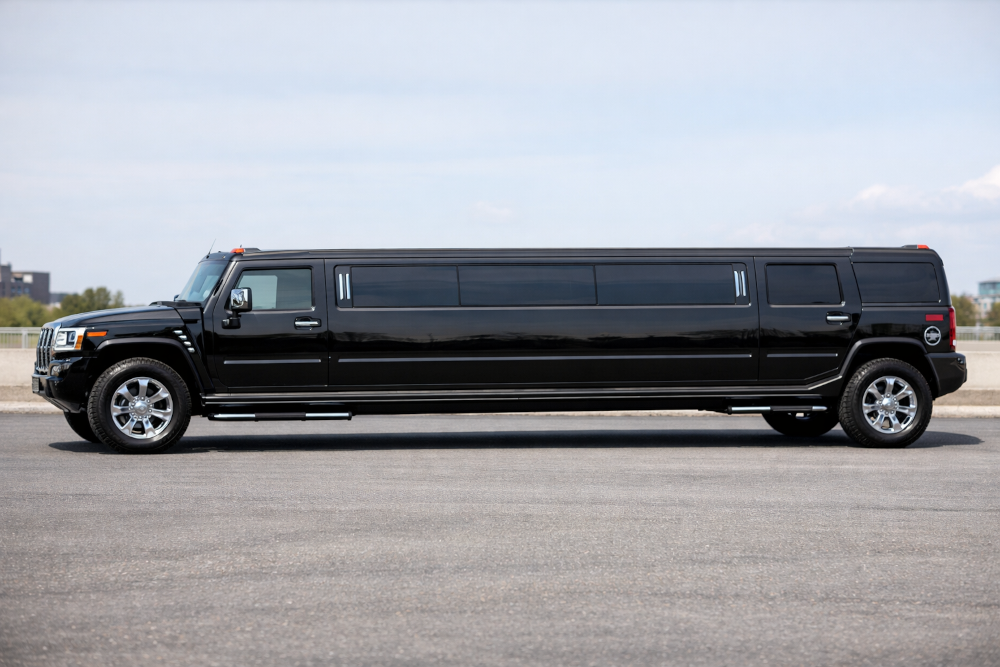
VTL 385-3(f) – Center Panel Greater Than 100 Inches
The Benjamin Goldman Law Office can represent limousine operators, livery vehicle owners, and drivers cited under VTL § 385(3)(f), "Center Panel Greater Than 100 Inches." This statute regulates the length of center panels in altered livery vehicles (commonly stretch limousines). The center panel cannot exceed 100 inches unless the vehicle can demonstrate compliance with all applicable federal and state motor vehicle safety standards. Violations can lead to significant fines and potential registration issues. We can defend these tickets statewide.
Penalties for VTL 385-3(f) Center Panel Violation
Violations of VTL § 385(3)(f) are typically handled as traffic infractions. The fines are substantial compared to standard traffic tickets.
- First offense: Fine between $200 and $500; up to 30 days jail; surcharge $88 (other courts) / $93 (town & village).
- Second offense (within 18 months): Fine between $500 and $1,000; up to 60 days jail; surcharge $88 / $93.
While this particular violation does not carry "points", they can impact commercial vehicle registration and business operations. Courts also have discretion to impose the higher end of the fine range, especially for egregious violations or when safety standards are not met. Additionally, vehicles that don't meet safety standards may face registration issues or be prevented from operating. For other dimension violations, such as VTL 385 Overwidth violations or VTL 385 Overweight violations, penalties can also be severe.
Statute
The relevant section of the Vehicle and Traffic Law states:
§ 385. Dimensions and weights of vehicles.
3. (f) The length of any center panel of an altered livery shall not exceed one hundred inches unless the owner of such vehicle can demonstrate that the livery conforms to all applicable federal and state motor vehicle safety standards at the time of registration in accordance with section four hundred one of this chapter.
What This Means for Drivers: This section applies to "altered livery" vehicles, which typically refers to stretch limousines or other livery vehicles that have been modified from their original manufacturer's specifications. The "center panel" is the section of the vehicle that was added during the stretching or alteration process—the portion between the original front and rear sections of the vehicle.
The law states that this center panel cannot exceed 100 inches (approximately 8.33 feet) in length, unless the owner can demonstrate that the altered vehicle conforms to all applicable federal and state motor vehicle safety standards at the time of registration. This means that if your center panel exceeds 100 inches, you must be able to prove compliance with safety standards to avoid violation.
How to Fight a VTL § 385(3)(f) Ticket
Fighting a center panel violation ticket involves examining whether the vehicle is actually an "altered livery," how the center panel was measured, and whether the vehicle can demonstrate compliance with safety standards. This is especially important for limousine and livery operators where business operations and vehicle registration are at stake.
Common defense angles include:
- Measurement Accuracy: Did the officer accurately measure the center panel? The center panel is specifically the added section between the original front and rear portions. Was the measurement taken correctly, or did it include portions of the original vehicle?
- Vehicle Classification: Is this actually an "altered livery" vehicle? The law specifically applies to altered livery vehicles. If the vehicle wasn't altered, or isn't a livery vehicle, this subsection may not apply.
- Safety Standards Compliance: Can you demonstrate that the vehicle conforms to all applicable federal and state motor vehicle safety standards? This is the key exception—if your center panel exceeds 100 inches but you can prove safety compliance, you may avoid violation. Documentation from registration (VTL § 401) or safety inspection certifications may be relevant.
- Registration Documentation: At the time of registration under VTL § 401, was the vehicle properly documented as meeting safety standards? Can you produce this documentation to demonstrate compliance?
- Center Panel Definition: Was the officer's identification of what constitutes the "center panel" correct? The center panel must be the altered section added during the stretching process, not the entire vehicle length or other portions.
- Prior Compliance: Has the vehicle been previously registered and operated legally? If so, this may support an argument that it meets safety standards, though documentation is still important.
- Measurement Method: How was the measurement taken? Was it taken from the correct reference points? Center panel length should be measured from where the original vehicle ends to where it resumes, not the entire vehicle length.
Why This Issue is Common: Limousine operators and livery vehicle owners often face these problems during Department of Transportation (DOT) inspections, registration renewals, or when pulled over for other violations. These violations are common because:
- Many stretch limousines have center panels that exceed 100 inches, especially larger vehicles designed to carry more passengers.
- Demonstrating compliance with all federal and state safety standards can be complex and requires proper documentation, which may not always be readily available during a roadside stop.
- Officers may not always accurately identify or measure the center panel, sometimes measuring the entire vehicle length or other portions instead.
- The distinction between "altered livery" and factory-built extended vehicles can be unclear, and some vehicles may not actually qualify as "altered livery" under the law.
The law was enacted to ensure that heavily modified vehicles meet safety standards, particularly important given safety concerns with stretched limousines. However, proper documentation and accurate measurement are critical to defending these violations.
The Benjamin Goldman Law Office can handle VTL § 385 violations across the state, including altered livery center panel cases. We understand the nuances of livery vehicle regulations, safety standard compliance requirements, and registration documentation. We work to protect your business operations and vehicle registration. Contact us at your convenience, via phone call, email, or text message. We will be glad to review your case for free.
CALL NOWOther Traffic Violations We Handle
Community Discussion
Questions? Thoughts? Let us know down below!
If you were involved in an accident due to an overlength or overdimension vehicle, contact Sternberg Injury Law Firm to discuss your case.
Disclaimer: All the content of this website has been prepared by Benjamin Goldman Law Office PC for informational purposes only and does not constitute legal advice. Viewing this site does not create an attorney–client relationship. Readers should not act or refrain from acting based on this information without seeking professional counsel from an attorney licensed in the state where the citation was issued.