VTL 1242-A — Operating E-Bike While Intoxicated
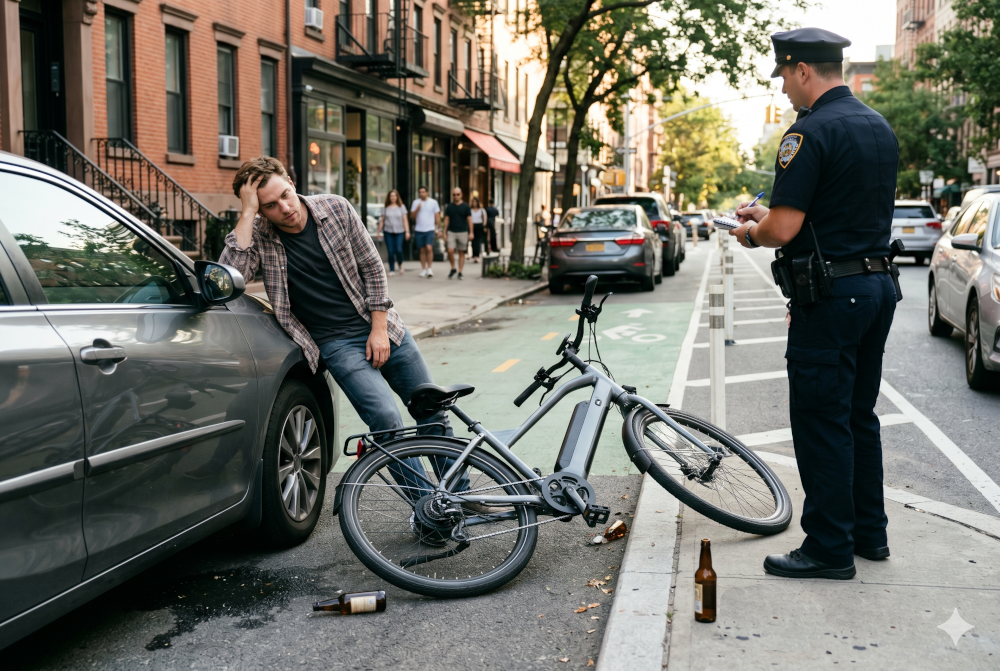
If you were charged with Vehicle & Traffic Law (“VTL”) § 1242-A, it means that an officer is alleging that — while under the influence of alcohol or drugs — you were operating a bicycle with electric assist—commonly called an e-bike (this includes rental bikes like Citi Bike's pedal-assist models). With e-bikes now common on city streets and greenways, many riders are surprised to learn that the same DWI/DWAI framework used for cars can apply to a pedal-assist bicycle. It is a violation of the law and, depending on the circumstances, can carry criminal penalties.
Can You Get a DWI on an E-Bike in New York?
Yes. Vehicle & Traffic Law ("VTL") § 1242-A prohibits operating a bicycle with electric assist (e-bike) while intoxicated or impaired in New York State. Operating while intoxicated (DWI) or per se at a BAC of .08% or more is a misdemeanor on the first offense. A second offense within ten years escalates to a Class E felony. Like its e-scooter counterpart, VTL § 1289, enforcement is limited to situations involving a crash (VTL § 1242-A, subdivision 9).
What Is the Penalty for Riding an E-Bike Impaired in New York?
- DWAI — Ability impaired by alcohol [1242-A(a)]: Traffic infraction on the first offense. Fine up to $300, up to 15 days in jail. Surcharge: $88 in city courts / $93 in town and village courts. A second within 5 years: fine up to $750, up to 30 days. A third within 10 years escalates to a misdemeanor: fine up to $1,000, up to 180 days.
- DWI per se (.08+ BAC) [1242-A(b)], Intoxicated [1242-A(c)], Drugs [1242-A(d)], Combined [1242-A(e)]: Misdemeanor on the first offense. Fine up to $500, up to 1 year in jail. Surcharge: $395 in city courts / $400 in town & village courts. A second within 10 years is a Class E felony: fine up to $1,000. A third within 10 years is also a Class E felony: fine up to $4,000.
- No unconditional discharge: Per VTL § 1242-A(2), no judge may impose an "unconditional discharge" for the misdemeanor/felony offenses.
The Crash Requirement — What VTL § 1242-A(9) Means
Subdivision (9) of VTL § 1242-A provides that no part of this section may be enforced unless in conjunction with a crash involving the e-bike operator. A "crash" means colliding with a vehicle, person, building, or other object. This means a police officer cannot charge an e-bike rider with VTL § 1242-A solely based on observed impaired riding — an actual collision must have occurred. This is an important procedural limitation that distinguishes e-bike enforcement from standard car DWI under VTL § 1192.
VTL § 1242-A vs. VTL § 1289 — E-Bike vs. E-Scooter
- VTL § 1242-A applies to bicycles with electric assist (e-bikes) — pedal-assist bicycles with an electric motor, governed by Article 34. This includes Class 1, 2, and 3 e-bikes as defined in VTL § 102-c.
- VTL § 1289 applies to electric scooters — throttle-operated stand-up scooters governed by Article 34-D.
- Penalty structure is identical: Both statutes share the same fine tiers, surcharges, misdemeanor/felony escalation schedule, crash requirement, and prohibition on unconditional discharge.
- Prior VTL § 1192 convictions matter: When sentencing for repeat offenses under VTL § 1242-A, courts must consider prior DWI (VTL § 1192-2, 1192-2a, 1192-3, 1192-4, 1192-4a) convictions within the relevant lookback period.
VTL § 1242-A — Statute (Key Provisions)
1242-a(a): No person shall operate a bicycle with electric assist while the person's ability to operate such bicycle with electric assist is impaired by the consumption of alcohol. [Traffic infraction, 1st offense.]
1242-a(b): No person shall operate a bicycle with electric assist while such person has .08 of one per centum or more by weight of alcohol in the person's blood. [Misdemeanor, 1st offense.]
1242-a(9): Notwithstanding any provision of this section, no part of this section may be enforced unless in conjunction with a crash involving an operator of a bicycle with electric assist.
Defending a VTL § 1242-A Charge
Key defenses include: challenging whether the vehicle qualifies as a "bicycle with electric assist" under the VTL definition; contesting whether a qualifying "crash" occurred as required by subdivision (9); challenging the chemical test administration or results; or arguing that prior convictions cited to elevate the charge do not fall within the applicable lookback window. Because misdemeanor and felony charges carry criminal records and mandatory jail exposure, this charge demands experienced legal counsel.
VTL § 1242-A misdemeanor and felony charges carry mandatory penalties. Contact us immediately if you have been charged.
Benjamin Goldman Law Office: Lawyers for VTL § 1242-A.
The Benjamin Goldman Law Office is a New York State traffic and criminal defense firm. We have fought over 100,000 traffic-related charges across New York State. With e-bikes now ubiquitous, VTL § 1242-A charges are a rapidly growing area of enforcement. Our team is ready, willing, and able to take on your case. Attorneys at the Benjamin Goldman Law Office aggressively pursue all possible defenses so that you do not end up with a criminal record and minimize exposure to any licensing issues. Our efforts are reflected in the thousands of verified testimonials the law firm has received over the years. Contact us for a free consultation.
CALL NOWOther Traffic Violations We Handle
Community Discussion
Questions from drivers about VTL 1242-A, Operating E-Bike While Intoxicated, with answers from the Benjamin Goldman Law Office, are collected in the VTL 1242-A, Operating E-Bike While Intoxicated community discussion. You can ask your own question there. Visit the community discussions hub to browse all topics.
If you were injured by an intoxicated e-bike operator, you can contact the Sternberg Injury Law Firm for information about your legal options.
Disclaimer: All the content of this website has been prepared by Benjamin Goldman Law Office PC for informational purposes only and does not constitute legal advice. The information on this website shall not be construed as an offer to represent you, nor is it intended to create, nor shall the receipt of such information constitute, an attorney-client relationship. Our hope is that you will find the information useful and informative, and we would be happy to communicate with you and answer any questions you may have about our legal services. Readers should not act upon the information on this website, or decide not to act based upon the information on this website, without first seeking appropriate professional counsel from an attorney licensed in the home state of the drivers license of the person who received the relevant traffic citation.